
Introduction
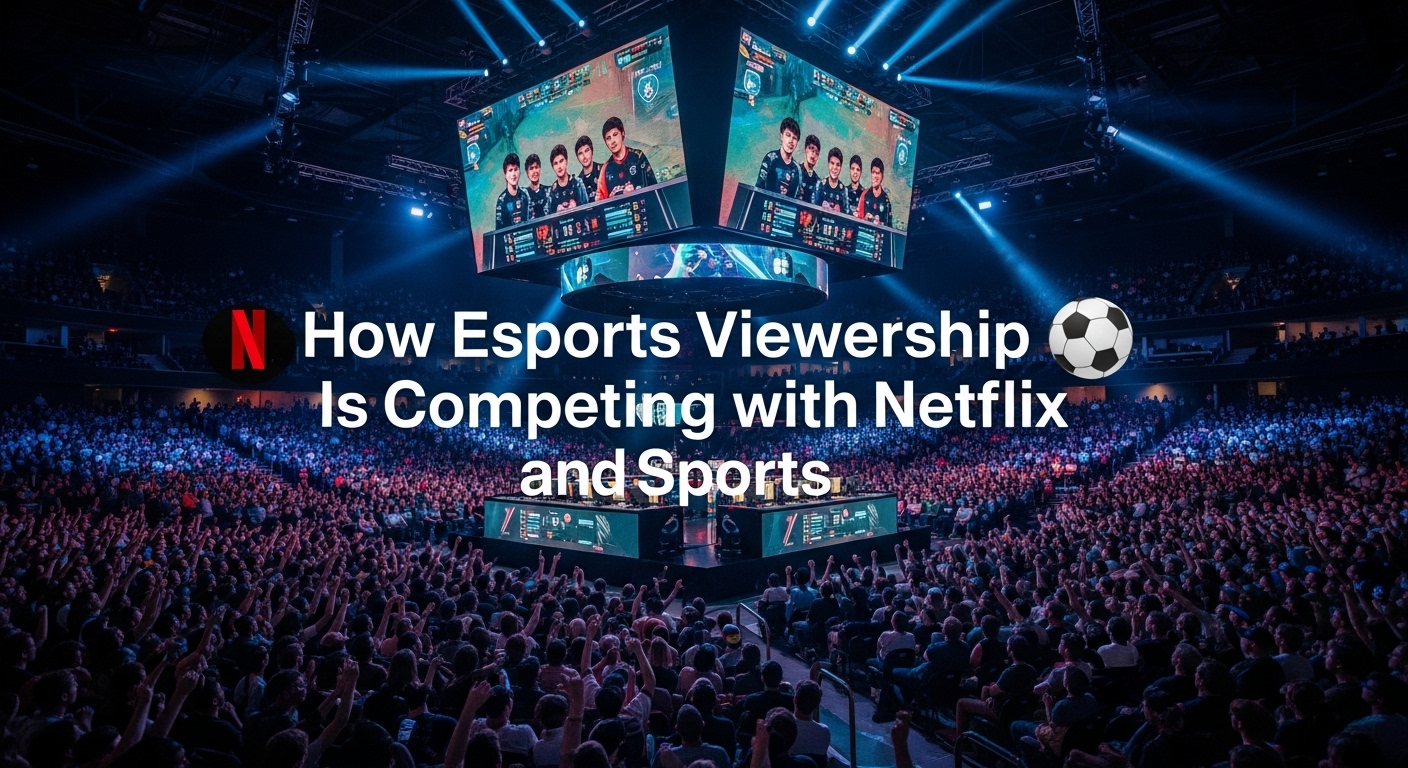
The way people consume entertainment has changed dramatically over the last decade. What was once dominated by cable TV, movie theaters, and live sporting events is now shared among streaming services, digital platforms, and competitive video gaming. One of the most surprising disruptors in this space is esports viewership—a phenomenon that’s not only growing rapidly but also competing directly with Netflix, traditional sports, and mainstream entertainment platforms.
In fact, esports tournaments now attract millions of viewers worldwide, rivaling the audiences of major sports leagues like the NBA, NFL, and even the Olympics. Platforms such as Twitch and YouTube Gaming have become the digital stadiums where fans gather, creating communities that blur the lines between sports fandom and digital culture.
But how exactly did esports rise to challenge entertainment giants like Netflix and sports leagues? And what does the future hold for esports viewership as streaming platforms expand globally? Let’s dive deep into this trend and uncover why esports is not just a niche interest but a major player in the global entertainment economy.
The Rise of Esports: From Hobby to Global Phenomenon
Esports, short for electronic sports, refers to competitive video gaming where professional players and teams face off in tournaments for prizes, sponsorships, and prestige.
What began as small local tournaments in the 1990s has now evolved into multi-million-dollar international events. Games like League of Legends, Dota 2, Counter-Strike: Global Offensive, Valorant, and Fortnite headline global competitions that attract audiences both in physical arenas and online streams.
Key factors driving this growth include:
- Accessible technology: With gaming PCs, consoles, and even mobile devices, almost anyone can participate or watch.
- Streaming platforms: Twitch, YouTube Gaming, and Facebook Gaming made esports easily viewable worldwide.
- Corporate investments: Brands like Coca-Cola, Red Bull, and Intel invest heavily in esports, legitimizing the industry.
- Prize pools: The Dota 2 International prize pool has exceeded $40 million, rivaling traditional sports earnings.
As a result, esports has transformed from a subculture to a mainstream entertainment powerhouse.
Esports vs. Netflix: The Battle for Screen Time
Netflix pioneered the streaming revolution, changing the way audiences consume content. However, esports is challenging Netflix for one simple reason: engagement.
1. Active vs. Passive Entertainment
- Netflix: Audiences watch shows and movies passively, often binge-watching for hours.
- Esports: Viewers are deeply engaged—chatting in live streams, following favorite players, analyzing strategies, and even playing the same games themselves.
This interactive experience gives esports a unique edge over traditional streaming platforms.
2. Shared Communities and Social Interaction
Netflix is solitary—you watch shows alone or with friends. Esports, on the other hand, thrives on community. Platforms like Twitch allow live chat, emotes, and streamer interactions, making viewers feel part of the event.
3. Watch Time Comparisons
- In 2023, Netflix had around 260 million subscribers worldwide, with an average of 3.2 hours of daily watch time per user.
- Twitch reported 1.6 billion hours watched per month, averaging 31 million daily visitors.
While Netflix still leads in overall numbers, esports platforms are catching up in watch hours, especially among younger demographics (Gen Z and Millennials).
Esports vs. Traditional Sports
Esports often faces comparisons to traditional sports like football, basketball, or cricket. But the competition isn’t as far-fetched as some may think.
1. Audience Numbers
- The 2022 League of Legends World Championship peaked at 5.1 million concurrent viewers online.
- The Super Bowl 2023 averaged 113 million viewers, but that’s a single annual event. Esports tournaments occur year-round.
- The NBA Finals and Stanley Cup often draw fewer viewers than the top esports events.
2. Accessibility and Cost
- Sports often require physical stadiums, tickets, and travel.
- Esports is accessible from anywhere with an internet connection.
This accessibility makes esports more appealing to global audiences, particularly in regions where traditional sports may not dominate.
3. Sponsorship and Revenue
Esports revenue is projected to surpass $1.9 billion by 2025, with income from media rights, ticket sales, and sponsorships. While this is smaller than traditional sports industries, the growth rate is far higher, showing esports is quickly closing the gap.
Why Esports Attracts Younger Generations
One of the biggest advantages esports has over Netflix and traditional sports is its dominance among Gen Z and Millennials.
- Digital natives: Younger audiences grew up gaming, so watching esports feels natural.
- Interactive streaming: Esports offers Twitch chat, Discord groups, and real-time engagement.
- Relatable heroes: Esports pros often start as regular gamers, making them relatable compared to Hollywood celebrities or elite athletes.
- Free to watch: Unlike Netflix or sports TV packages, most esports content is free on platforms like Twitch and YouTube.
These factors make esports the preferred entertainment choice for younger audiences who value community, interactivity, and cost-free options.
The Role of Streaming Platforms in Esports Growth
Streaming platforms are the backbone of esports viewership. Without them, esports wouldn’t be competing with Netflix and sports.
Twitch
- The leading esports streaming platform.
- Features real-time chat, subscriptions, and interactive features.
- Home to major events like Overwatch League and League of Legends Worlds.
YouTube Gaming
- Known for high-quality video archives and highlights.
- Exclusive partnerships with Call of Duty League and Overwatch League.
Facebook Gaming
- Growing in emerging markets like Southeast Asia and Latin America.
Together, these platforms have made esports borderless and 24/7, something Netflix and traditional sports can’t match.
Global Reach: Esports is Everywhere
Unlike sports, which are often regional (e.g., American football in the U.S., cricket in South Asia), esports is global by default.
- Asia-Pacific: Leads the world in esports viewership, especially China, South Korea, and Japan.
- Europe: Strong in CS:GO and League of Legends.
- North America: Growing rapidly with major leagues and arenas.
- Middle East & Africa: Fastest-growing markets due to mobile gaming and affordable internet.
This global reach makes esports a more inclusive competitor compared to both Netflix and traditional sports.
Esports and the Economics of Attention
The real competition among Netflix, esports, and sports isn’t just about revenue—it’s about attention span.
- Audiences have limited time, and every hour spent on Twitch is an hour not spent on Netflix or sports TV.
- Esports’ always-on content cycle—from daily streams to major tournaments—ensures fans always have something to watch.
- Netflix relies heavily on original content drops, while sports depend on seasonal schedules. Esports fills the constant entertainment gap.
This “attention economy” dynamic explains why esports is rapidly climbing the ladder of mainstream entertainment.
Esports and Traditional Sports: A Symbiotic Relationship?
While esports is competing with sports, it’s also merging with it:
- Franchises: NBA teams like the Philadelphia 76ers own esports teams.
- Cross-promotion: FIFA esports tournaments are supported by real-world soccer clubs.
- Shared sponsorships: Brands like Nike, Adidas, and Mercedes-Benz sponsor both athletes and gamers.
Rather than replacing sports, esports may become a complementary form of entertainment, especially for fans who consume both.
Esports vs. Netflix: The Future of Streaming Wars
As the streaming wars intensify, esports could become a decisive factor:
- Original esports content: Netflix has already produced esports documentaries like Arcane and League of Legends: Origins.
- Cross-platform competition: Netflix may move into live gaming events to rival Twitch.
- Gaming as a service: With Netflix Games already live, esports integration could be next.
This suggests esports isn’t just competing with Netflix—it might eventually merge with it.
Challenges Facing Esports Viewership
While esports is on the rise, it still faces challenges:
- Monetization gaps: Free streaming makes revenue harder to scale compared to subscription-based Netflix.
- Fragmentation: Too many platforms and tournaments make it difficult to centralize viewership.
- Legitimacy issues: Some still don’t consider esports “real sports,” slowing mainstream acceptance.
- Player burnout: Esports careers are short, often ending before age 25 due to intense schedules.
Addressing these challenges will be key for esports to solidify its position as a competitor to Netflix and sports.
Future Outlook: Where Esports Viewership is Heading
By 2030, esports could rival or surpass Netflix and sports in several ways:
- Virtual reality (VR) integration: Immersive esports viewing experiences.
- AI-driven personalization: Tailored streams and highlights for fans.
- Mainstream recognition: Potential inclusion of esports in the Olympics.
- Hybrid events: Stadium esports competitions streamed worldwide, combining live and digital audiences.
With its rapid growth trajectory, esports may soon dominate the global entertainment industry.
Conclusion
Esports viewership is no longer just a niche interest—it’s a global entertainment powerhouse competing directly with Netflix and traditional sports.
- Compared to Netflix, esports offers interactive, community-driven entertainment that keeps fans more engaged.
- Against sports, esports boasts global accessibility, year-round events, and younger audiences.
- Streaming platforms have amplified esports’ growth, ensuring it competes head-to-head with the biggest names in entertainment.
The entertainment battlefield is no longer just about TV ratings or subscription numbers—it’s about where audiences invest their time and attention. And increasingly, they’re choosing esports.